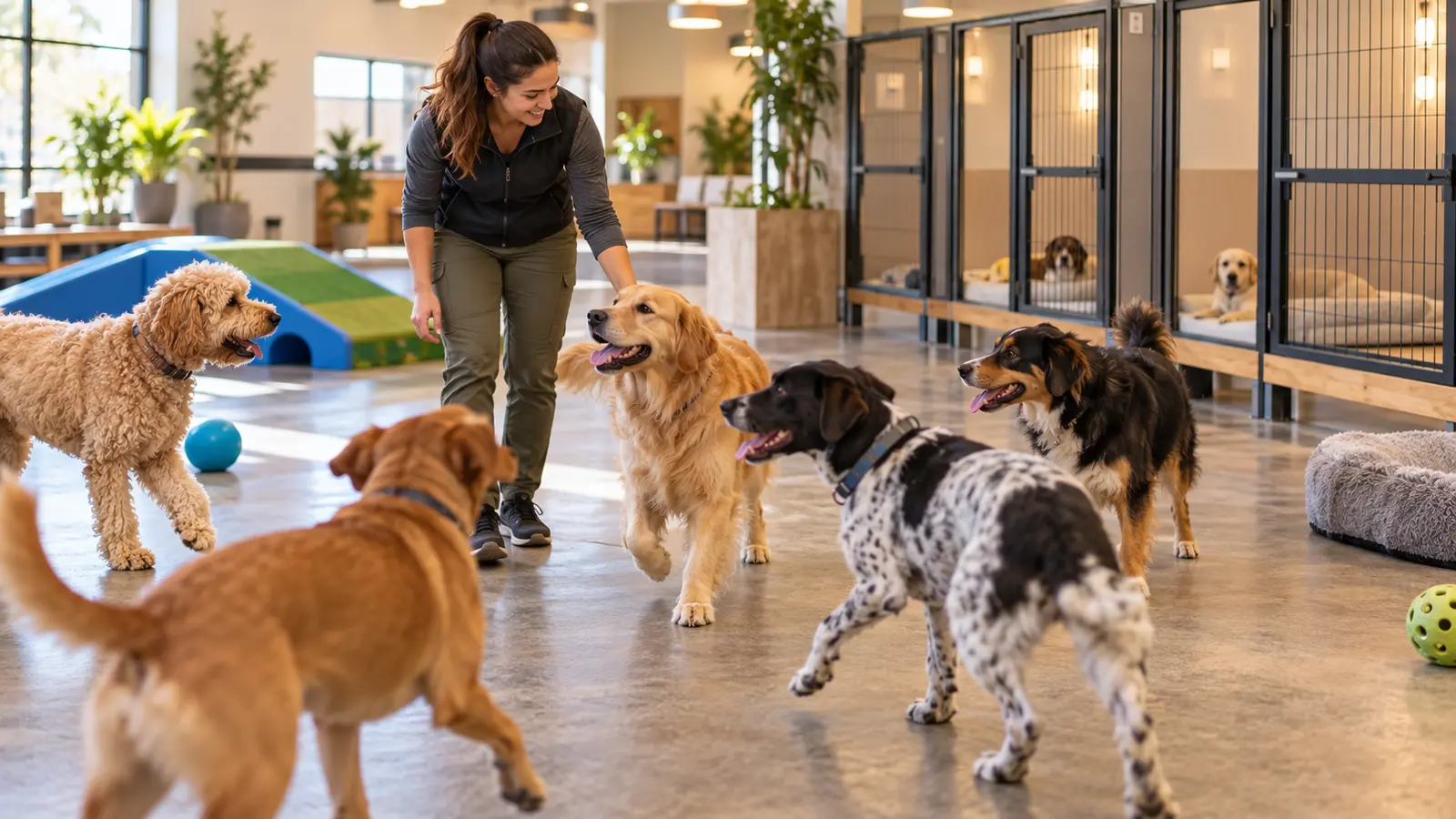
Pet boarding and daycare facilities combine hospitality-style reservations with animal-care staffing, specialized space, cleaning, supervision and safety needs. A useful funding request separates true usable capacity from advertised capacity, reconciles deposits and packages, and tests payments against normal and off-season collected cash rather than peak holiday demand.
Define the facility model and exact request
Describe whether the business is an overnight boarding kennel, pet hotel, dog daycare, cat boarding facility, training or grooming business with boarding, veterinary-affiliated boarding operation, franchise, home-based service or mixed model. Separate each location and service line.
State whether the request is for kennels or suites, play areas, flooring, fencing, drainage, ventilation, grooming, laundry, cleaning systems, cameras, software, vehicles, payroll, a buildout, an acquisition, real estate or operating working capital. Prepare a detailed sources-and-uses schedule.
The CashMigo pet boarding and daycare funding page provides a focused starting point. Connect the amount to documented demand, usable capacity, collected revenue and a conservative operating plan rather than the largest theoretical animal count.
Map usable capacity by accommodation and service
List overnight kennels, suites, runs, catteries, private rooms, play areas and daycare groups by location, animal size, accommodation type and current operating status. Separate installed, permitted, safe and actually usable capacity.
Identify rooms or areas held offline for maintenance, isolation, temperament separation, cleaning, staffing limits or other operating constraints. Maximum physical count may overstate the capacity available on a normal day.
For a project, show existing and added capacity, construction phases, closures, inspection or approval dependencies, opening timing and a slower-ramp case. Financing does not establish safe or permitted capacity.
Tell CashMigo what the business needs, how much and how soon. We will review the request and help identify potential next steps.
Check My Funding Options →Normalize boarding occupancy and daycare attendance
Track occupied pet-nights and available pet-nights by accommodation type and month. Explain how multi-pet families, shared accommodations, late checkout, complimentary stays and extended stays affect the count.
Track daycare visits, unique active customers, attendance by weekday, packages used, cancellations, no-shows, waitlists and collected revenue. Reservations and package balances are not the same as completed paid visits.
Compare normal, holiday, school-break, summer, weekend and off-season utilization. A few sold-out dates do not prove year-round repayment capacity.
Measure rate, stay and service mix
Separate standard boarding, premium suites, daycare, grooming, bathing, training, transport, medication administration, play sessions, retail and other material revenue. Reconcile booked charges with discounts, credits, refunds, chargebacks and cash collected.
Measure average collected rate, average length of stay and contribution by service or accommodation after direct labor, food or supplies, merchant fees, cleaning, laundry and transport.
Test whether added services use existing labor and space or require separate staff, equipment, scheduling and supervision. Revenue growth may not improve cash flow when service complexity rises faster than contribution.
Reconcile deposits, packages and cancellation obligations
Track reservation deposits, prepaid packages, memberships, gift cards, unused credits, cancellation fees, refunds and chargebacks separately from earned revenue. Reconcile balances with reservation, point-of-sale and accounting records.
Document the written cancellation, modification, late pickup, illness, no-show, package-expiration and refund rules. Apply them consistently and review them with qualified advisers for the relevant jurisdiction.
Model cash obligations when reservations cancel, a facility must close or customers request refunds. Collected deposits and unused package proceeds may still carry future service or refund obligations.
Plan staffing by shift and animal load
Map managers, attendants, handlers, reception, grooming, training, transport, cleaning and overnight coverage by shift, service and location. Include wages, overtime, payroll taxes, benefits, recruiting, screening, training and supervision.
Compare scheduled labor with animals in care, accommodation mix, playgroups, arrivals, departures, feeding, cleaning, medication tasks and operating hours. Do not use a single staffing ratio without considering animal mix, facility layout, services and applicable requirements.
For growth, model a gradual hiring and training ramp. Added capacity does not create collected cash when staffing, supervision or local demand prevents safe use.
Separate care and safety controls from financing
Document non-sensitive operating controls for intake, animal identification, compatibility assessment, group separation, feeding, cleaning, rest, monitoring, incident escalation, emergency contacts, evacuation, fire protection, climate control and backup power.
Review how the facility handles aggressive behavior, illness, injury, escapes, bites, severe weather, utility failure and temporary closure. Maintain appropriate professional, veterinary, emergency and insurance relationships.
Funding approval does not validate animal-care practices, licensing, staffing, training, facility safety, insurance coverage or regulatory compliance. Confirm current federal, state and local requirements with the relevant authorities and qualified professionals.
Protect vaccination and health information
Maintain a documented intake policy for vaccination status, communicable-disease screening, parasite control, veterinary contacts, medications, allergies, dietary needs and emergency authorization as appropriate to the business and jurisdiction.
CDC pet-safety materials recognize vaccination and medical information as important for boarding and emergency preparation. Requirements and appropriate protocols vary, so use current veterinary and government guidance rather than relying on financing content.
Provide only aggregated policy and exception counts for an initial funding review. Never place identifiable owner information, vaccination certificates, veterinary records or medication instructions for a specific animal in the general funding form.
Budget the facility and equipment completely
List kennels, suites, catteries, gates, fencing, flooring, wall finishes, drains, plumbing, ventilation, heating and cooling, lighting, fire protection, cameras, access control, laundry, grooming, cleaning, waste handling, backup power, computers and reservation software.
Include design, construction, demolition, electrical, plumbing, drainage, sound control, permits, inspections, accessibility, shipping, installation, training, downtime, contingency and rent before opening. Separate durable assets from supplies and subscriptions.
For outdoor areas, vehicles or transport services, include secure containment, weather protection, maintenance, insurance, cleaning, route time and operating policies. An equipment quote alone may not capture the full project cost.
Control food, medication and customer-property custody
Track food, treats, medications, bedding, crates, collars, leashes and other customer-supplied property through documented intake, labeling, storage, access and return procedures.
Separate company-owned inventory and supplies from customer property. Do not count customer belongings, prepaid services or entrusted medications as unencumbered business assets.
For financial review, use aggregate spoilage, loss, claim and replacement data. Keep detailed pet instructions, owner identities, access codes and clinical records within the approved operating system and secure review process.
Evaluate insurance, incidents and downtime
Prepare a non-identifying summary of general liability, property, workers compensation, commercial auto, cyber and relevant animal-care or custody coverage. Review exclusions, limits, deductibles and required endorsements with a qualified insurance professional.
Track incident type, operational cause, direct cost, claim status, corrective action and downtime without exposing customer or pet identities in the initial funding file.
Model the cash impact of closure, quarantine, HVAC or drainage failure, storm damage, staffing disruption, vehicle loss or reputational events. Insurance proceeds and claim timing should not be assumed until documented.
Evaluate an acquisition or new location
Separate real estate or lease rights, buildout, equipment, customer deposits, prepaid packages, memberships, reservations, employees, software, vehicles, brand, permits, contracts and assumed liabilities.
Reconcile seller financials with bank collections, reservation and point-of-sale reports, occupied pet-nights, daycare attendance, refunds, payroll, tax records and facility condition through qualified diligence.
Build a transition plan for customer communication, reservations, deposits, staff, health policies, vendor accounts, insurance, systems, inspections, licenses and working capital. Purchase price and rent deposits are only part of the cash requirement.
Build a seasonal 13-week cash-flow forecast
Map collected boarding, daycare, grooming, training and other revenue against payroll, rent, food and supplies, cleaning, laundry, utilities, insurance, marketing, maintenance, taxes, current obligations and proposed financing payments by week.
Create downside cases for fewer holiday reservations, cancellations, refund spikes, off-season attendance, slower package sales, staffing overtime, facility downtime, weather disruption and a delayed opening.
Place the proposed payment after essential animal care, staffing, facility and operating needs. If the plan depends on permanent peak occupancy, nonrefundable deposits or immediate full use of new capacity, reduce the amount or reconsider the structure.
Compare potential funding structures
Equipment financing may fit defined qualifying assets. A business line of credit or working-capital path may be considered for documented operating needs. SBA financing may support eligible working capital, equipment, real estate or ownership changes, subject to lender and program requirements.
Compare gross amount, deductions, net proceeds, total cost, payment amount and frequency, term or expected duration, collateral, liens, guarantees, covenants, reporting, renewal conditions and early-payoff treatment.
Match payment timing with actual collected revenue. Review financing, property, animal-care, employment, insurance, licensing and acquisition decisions with qualified professionals before committing.
Prepare a clear, secure starting file
Useful starting records may include recent bank statements, year-to-date and prior-year financials, occupied pet-nights, daycare attendance, collected revenue by service, rates, average stay, capacity, deposits, refunds, labor, facility costs, equipment, current obligations and a sources-and-uses schedule.
Add detailed reservation, customer, health, incident, insurance, facility, licensing and acquisition files only when requested through an approved secure process.
Begin through CashMigo's 60-second funding check using non-sensitive business information. Never submit pet-owner identities, vaccination certificates, veterinary records, medication instructions tied to a specific pet, reservation access codes, payment-card data, Social Security numbers or bank credentials through the general form.
Frequently asked questions
Can funding help build or improve a pet boarding facility?
Potentially. Providers may review the location, lease or property, plans, contractor and equipment quotes, permits or approvals, contingency, operating history, projected usable capacity, staffing, credit, cash flow and applicant profile.
Can kennels, flooring, fencing, laundry or grooming equipment be financed?
Potentially. Providers may review the asset or improvement, vendor, price, condition, installation, useful life, facility, applicant profile, credit, cash flow and program requirements.
Why separate deposits and prepaid packages from earned revenue?
Deposits, memberships, packages, gift cards and credits may represent future service or refund obligations until the stay or visit is completed and revenue is earned under the business's accounting and contract terms.
What operating measures may help explain a boarding request?
Useful measures may include occupied and available pet-nights, daycare visits, collected rate, average stay, accommodation and service mix, usable capacity, cancellations, refunds, staffing by shift and seasonal cash flow.
Should vaccination records or pet medical information be uploaded through the funding check?
No. Use aggregated, non-sensitive information. Never submit identifiable vaccination certificates, veterinary records, medication instructions for a specific pet, owner identities, payment data or credentials through the general form.