
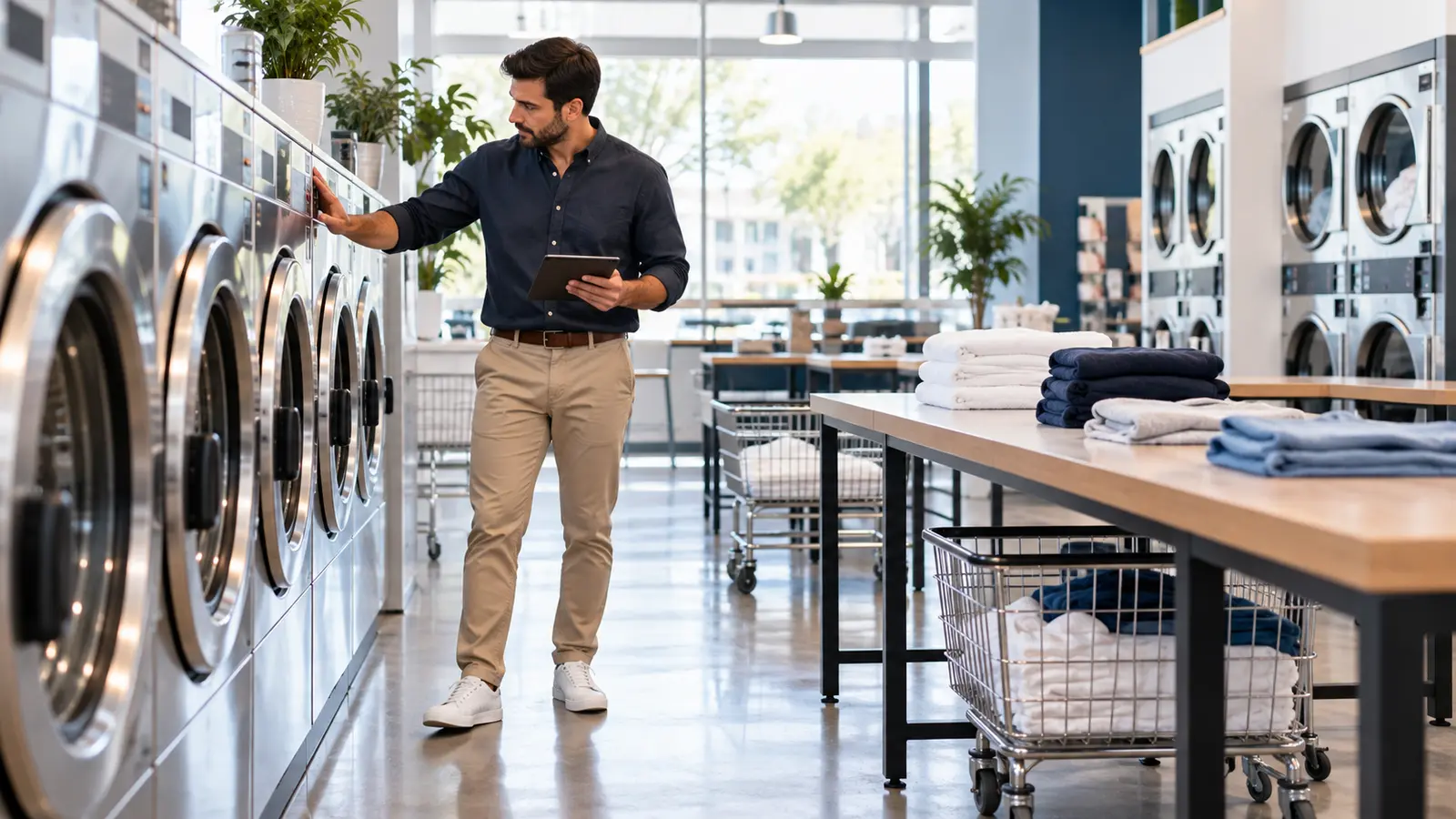
A laundromat combines equipment performance, utility consumption, lease economics and customer demand. Replacing machines, building a new store or buying an existing location can require capital before improved capacity and efficiency produce collected revenue. This guide explains how to document the project, examine store-level economics and compare potential funding paths without assuming that seller claims or projected machine turns guarantee results.
Define the project and complete budget
Separate emergency repairs, planned replacements, a partial retool, complete store renovation, new-location buildout and acquisition. Each has a different scope, useful life, downtime risk and potential funding structure.
List machines, bases, delivery, rigging, installation, removal, plumbing, electrical, gas, venting, water heating, payment systems, software, security, signage, permits, professional fees, insurance, initial supplies and contingency separately.
The CashMigo laundromat business funding page provides a focused starting point. Request capital around a documented project and realistic opening or installation schedule rather than the maximum amount that may be available.
Measure machine-level and store-level economics
Prepare a machine list showing type, capacity, age, ownership, condition, vend price, estimated turns, repair history and replacement priority. Separate washer, dryer, vending, wash-dry-fold and pickup or delivery revenue when those services are offered.
Reconcile payment-system reports, coin collections and business deposits with financial statements. Explain cash handling, refunds, free cycles, discounts, outages and seasonal changes so the store's actual collected revenue is clear.
Review rent, common-area charges, payroll, repairs, parts, supplies, merchant fees, insurance and utility expense. Test the proposed payment against a slower-turn case, higher utility expense and temporary machine downtime.
Tell CashMigo what the business needs, how much and how soon. We will review the request and help identify potential next steps.
Check My Funding Options →Confirm utilities, installation and downtime
Commercial machines may require specific water, sewer, drain, electrical, gas, venting, structural and access conditions. Obtain detailed vendor and contractor scopes and confirm the existing site can support the planned machine mix.
Identify required landlord consent, permits, inspections, utility approvals and code work with qualified professionals. The equipment quote alone may not cover infrastructure, opening walls or floors, restoration, professional fees or the revenue impact of closing part of the store.
Plan installation in phases when practical and document the expected downtime. Include a contingency for concealed conditions and scheduling delays without making assumptions about approval or completion dates.
Review the lease or property
For a leased location, review the remaining term, renewal options, rent increases, assignment rights, permitted use, repair responsibilities, utility obligations, personal guarantees and landlord approval requirements with qualified advisers.
The useful life and payment period for fixed equipment should make sense alongside the location rights. A short or uncertain lease can affect both the business plan and potential provider review, particularly when machines and infrastructure are difficult to move.
For owned real estate, separate the operating-business project from property acquisition or improvement costs. A commercial real-estate structure may be considered for a qualifying property transaction, while equipment or term financing may address other eligible project components.
Evaluate an acquisition carefully
Build a complete sources-and-uses schedule covering purchase price, machines, payment systems, supplies, deposits, professional fees, transfer costs, repairs, deferred maintenance and post-closing working capital. Identify whether real estate, accounts, cash, receivables or other assets are included.
Review tax returns, financial statements, payment-system records, collection procedures, bank activity, machine list, turns and vend prices, utility bills, repair logs, permits, licenses, lease or property records, employee costs and current obligations. Independently verify important seller representations.
Model a base case and a lower-volume case. Include planned price changes, equipment downtime, customer retention, staffing, marketing and utility costs. Use qualified legal, accounting, equipment, lease, real-estate and valuation advisers where appropriate.
Compare potential funding paths and prepare records
Equipment financing may fit qualifying commercial laundry machines or payment systems. Compare contribution, term, payment, fees, equipment security, installation treatment, insurance and end-of-term ownership.
SBA financing or a business term loan may be considered for a qualifying acquisition, buildout or broader renovation. A line of credit or working-capital structure may fit certain recurring repair or operating needs when the business qualifies and the repayment source is clear.
Useful starting records may include business bank statements, financial statements, machine and repair records, payment-system or collection summaries, utility bills, lease or property information, vendor and contractor quotes, current obligations and a clear budget. Share only non-sensitive starting information through CashMigo's 60 second funding check or call 1-844-617-CASH.
Frequently asked questions
What laundromat expenses may business funding support?
Depending on the program and final agreement, potential uses may include eligible machines, payment systems, installation, utility work, renovation, repairs, working capital, acquisition or expansion.
Can a laundromat finance replacement washers and dryers?
Potentially. Providers may review the equipment, vendor, price, condition, useful life, installation, store profile, lease or property and applicant qualifications.
Why are utility bills important?
Water, sewer, gas and electric costs can materially affect laundromat cash flow. Historical bills and the expected consumption of planned equipment help explain store economics and potential savings or risks.
Can funding support a laundromat acquisition?
Potentially. A review may include purchase terms, historical financials, verified collections, machine records, utility bills, repairs, lease or real estate, buyer experience, contribution and transition plan.
Does a seller's stated machine-turn count prove revenue?
No. Turn estimates should be reconciled with payment-system data, collections, bank deposits, utility usage, pricing, hours, seasonality and other store records.
What should not be submitted through the funding check?
Do not upload tax returns, bank statements, identification, payment-system credentials, lease files or other sensitive documents through the short form. Begin with non-sensitive business information.
