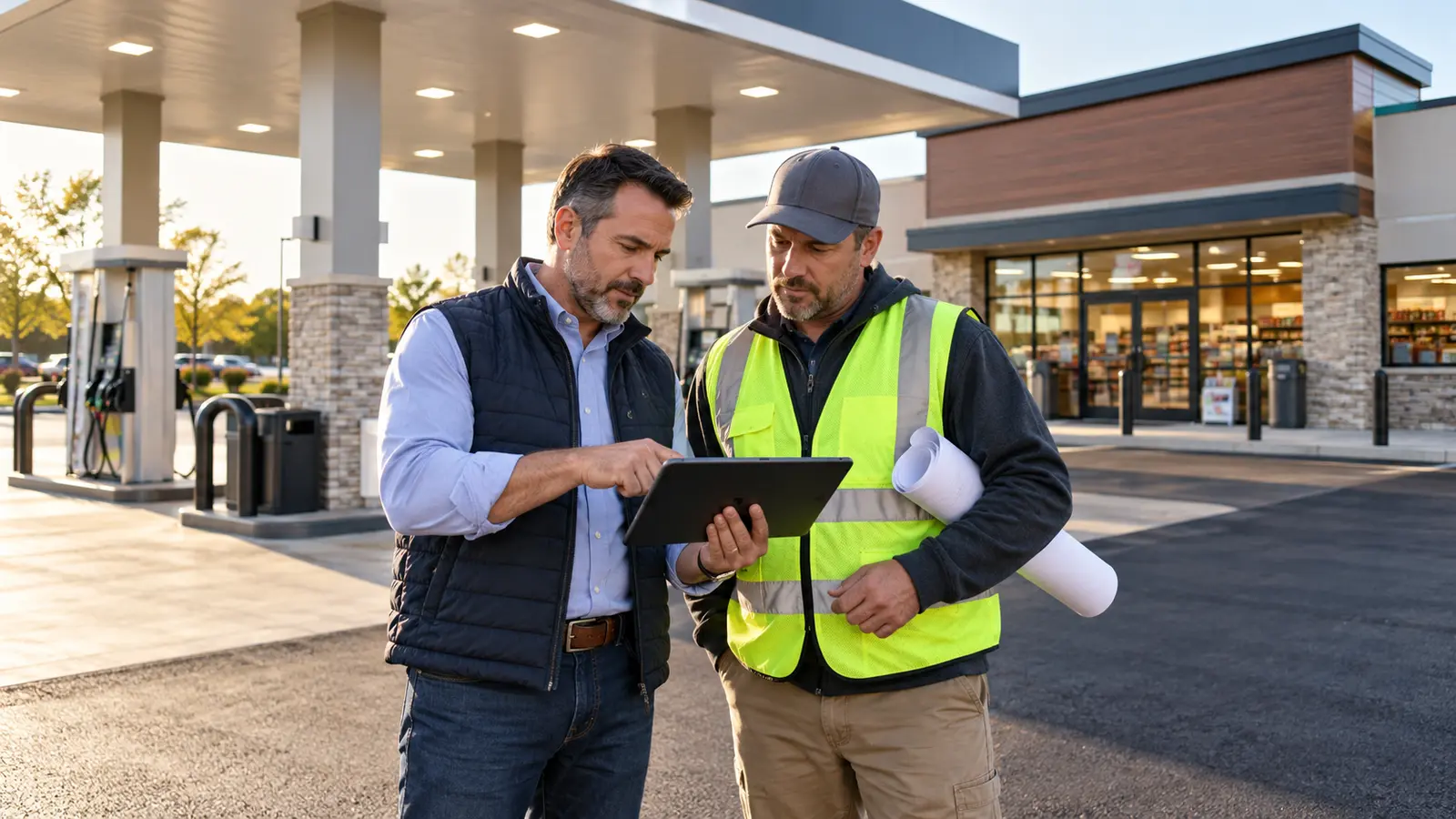
Gas stations and convenience stores combine multiple cash-flow cycles. Fuel purchases, merchandise, food service, equipment maintenance and property costs may move on different schedules and produce different margins. This guide explains how to define the funding need, separate operating categories, document equipment or property work and prepare for acquisition due diligence without treating sales volume as guaranteed repayment capacity.
Define the exact use of funds
Separate recurring working-capital needs from long-lived investments. A one-time fuel purchase, seasonal store inventory, pump replacement, refrigeration upgrade, property renovation and complete business acquisition each require a different budget and potential repayment structure.
List inventory, equipment, installation, permits, professional fees, repairs, technology, security, insurance, payroll and contingency separately. For a property project, distinguish business assets from real-estate costs and confirm who owns each improvement.
The CashMigo gas station and convenience store funding page provides a focused starting point. Request an amount tied to a documented need and timing rather than automatically seeking the largest possible approval.
Separate fuel volume from collected margin
Review gallons sold, fuel revenue, acquisition cost, card and network charges, taxes, delivery timing and gross margin separately from merchandise and food-service results. High fuel revenue does not necessarily produce the same available cash as a similar amount of higher-margin inside-store sales.
Break out merchandise, prepared food, beverages, tobacco, lottery or other categories at an appropriate business-summary level. Track sales, cost of goods, spoilage, shrinkage, inventory turnover and cash actually collected so a provider can understand the operating model.
Build a conservative forecast that includes price changes, supplier terms, seasonality, equipment downtime and a slower-sales case. Test whether a proposed payment remains manageable after ordinary inventory, payroll, rent, utilities, insurance and maintenance costs.
Tell CashMigo what the business needs, how much and how soon. We will review the request and help identify potential next steps.
Check My Funding Options →Budget equipment and improvements completely
For pumps, point-of-sale systems, refrigeration, kitchen or coffee equipment, signage, security, lighting or backup power, obtain detailed vendor quotes showing equipment, installation, delivery, training, software and service requirements.
For canopy, paving, drainage, electrical, tank-related or other site work, define the scope with qualified contractors and advisers. Confirm ownership, permits, code requirements, access, downtime and responsibility under the lease, brand or supplier agreement before relying on a budget.
Compare the asset's useful life with the proposed payment period. Equipment financing may fit certain qualifying assets, while a term or real-estate structure may be considered for a larger integrated project. Availability and permitted uses depend on the applicant, asset, property and provider.
Prepare acquisition and environmental due diligence
A complete acquisition budget may include business value, inventory, equipment, real estate or lease rights, professional fees, inspections, repairs, technology conversion, deposits, licenses and post-closing working capital. Identify what is included in the purchase price and how fuel and store inventory will be counted at closing.
Review historical tax returns and financial statements, bank activity, fuel and inside-store sales, margins, supplier and brand agreements, card processing, licenses, payroll, leases, equipment, maintenance, insurance, taxes, utilities and current obligations with qualified advisers.
Site condition and environmental matters can materially affect a transaction. Obtain appropriate tank, testing, compliance, spill, remediation, insurance and environmental records and any professional assessments required by the buyer, provider or law. Do not rely only on a seller statement or visual inspection, and do not upload sensitive property or environmental files through a general website form.
Compare potential funding paths
A business line of credit may fit a qualifying established operator with recurring short-term inventory or repair needs and a reliable plan to reduce each draw. Review draw costs, payments, renewal conditions and changing availability.
Equipment financing may be considered for qualifying pumps, point-of-sale, refrigeration, food-service or other identified business assets. Confirm installation, ownership, insurance, end-of-term treatment and whether the equipment is attached to leased property.
SBA financing, a term loan or commercial real-estate financing may be considered for a qualifying acquisition or larger project. Contribution, collateral, appraisal, environmental review, permitted uses, timing and documentation vary by program, provider and transaction.
Prepare records and review the complete offer
Useful starting records may include business bank statements, financial statements, category sales, fuel volume, gross margins, inventory reports, supplier terms, card-processing summaries, payroll, leases, equipment lists, current obligations and a clear use-of-funds budget.
For an acquisition, additional items may include the purchase agreement, seller financials, inventory method, buyer resume, ownership information, contribution, property or lease records, environmental materials and a transition plan. Provide sensitive records only through an approved secure channel when requested.
Compare gross amount, deductions, net proceeds, payment amount and frequency, complete cost, term, collateral, guarantees, fees, covenants, permitted uses, renewal conditions and early-payoff treatment. Share non-sensitive starting information through CashMigo's 60 second funding check or call 1-844-617-CASH.
Frequently asked questions
What gas station expenses may business funding support?
Depending on the program and final agreement, potential uses may include eligible fuel or store inventory, equipment, technology, repairs, renovation, working capital, acquisition or expansion.
Can fuel inventory be financed?
Potentially. Providers may review supplier terms, fuel volume, margins, payment schedules, inventory controls, collected cash flow, liens and existing obligations.
Can pumps and refrigeration equipment be financed?
Potentially. Eligibility may depend on the asset, vendor, condition, useful life, installation, site ownership, applicant profile and provider requirements.
Why are fuel and inside-store sales separated?
The categories can have different gross margins, cost structures, payment channels and inventory cycles. Separate records can provide a clearer view of operating cash flow.
What should a buyer review before acquiring a station?
A buyer may need to review financials, tax returns, sales and margins, supplier and brand agreements, inventory, equipment, licenses, leases or real estate, tanks, environmental records, insurance, current obligations and the complete purchase structure with qualified advisers.
Should environmental documents be submitted through the funding check?
No. Start with non-sensitive business information. Use an approved secure channel if detailed environmental, tank, property, tax, bank or identity documents are later required.