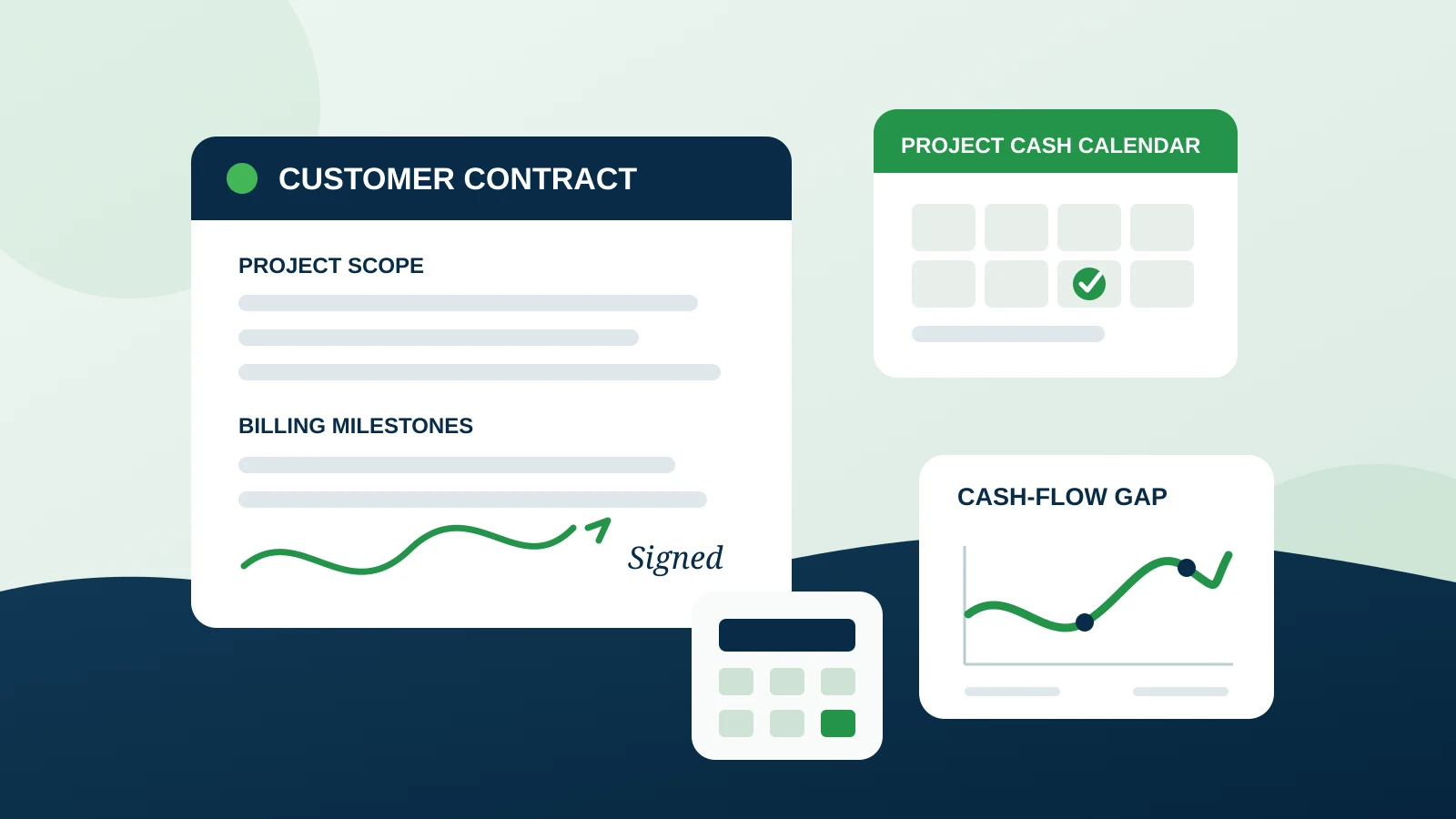
Winning a new contract can create an immediate cash-flow problem. The business may need to hire employees, buy materials, reserve equipment, obtain insurance or mobilize at a job site before the customer pays the first invoice. Business funding may help bridge an eligible, documented gap, but a signed contract is not the same as collected cash and does not make every project profitable. Before accepting a new obligation, the owner should test the contract's enforceability, complete cost, billing rules, likely collection timing and the proposed payment under realistic delays. These eight checks cannot guarantee approval, customer payment, project performance, profit, timing or any other outcome. They are designed to help an owner decide whether the opportunity, funding amount and payment structure make sense together.
1. Confirm what the customer has actually committed to buy
Read the executed contract, purchase order, statement of work and incorporated exhibits as one package. Confirm the legal customer, scope, quantities, locations, start date, completion requirements, pricing and signatures. A verbal award, unsigned proposal, letter of intent or expected renewal may support planning, but it should not be modeled as an unconditional customer payment.
Identify conditions that allow the customer to reduce, postpone or cancel the work. Examples may include funding approval, permits, site readiness, volume estimates, convenience termination, performance milestones or the customer's own client authorization. Note any minimum purchase commitment separately from a maximum contract value. A contract advertised as a $500,000 opportunity may authorize work only through individual orders that have not yet been issued.
Verify the contract directly with the customer through trusted contact information when appropriate. Keep signed documents, change orders and purchase orders organized. Funding providers may review contract validity differently, and no contract by itself guarantees that financing will be available.
2. Build the complete cost to start and deliver the work
Create a line-item budget for the cash required before the first dependable customer collection. Include labor, payroll taxes, benefits, materials, subcontractors, equipment, rentals, mobilization, permits, insurance, bonding, freight, travel, technology, professional fees and project-specific overhead. Use current quotes and staffing plans rather than a percentage of the contract price.
Separate one-time startup costs from recurring weekly or monthly costs. A business may be able to purchase the opening materials but still lack the cash needed for the second payroll, an equipment rental extension or a delayed inspection. Mark each cost by due date and identify which expenses are refundable, reusable on another project or lost if the customer cancels.
Connect the request to supporting records. CashMigo's business funding use-of-funds plan explains how to combine quotes, dates, a business contribution and a supported contingency. The requested amount should come from the dated project budget—not simply the largest amount that might be offered.
Tell CashMigo what the business needs, how much and how soon. We will review the request and help identify potential next steps.
Check My Funding Options →3. Calculate project margin after every direct and variable cost
Start with the contract revenue the business can reasonably earn, then subtract direct labor, payroll burden, materials, subcontractors, freight, commissions, equipment, permits, project management, warranty exposure and other costs that change with the work. Include expected waste, rework, overtime and customer deductions when those risks are supported by experience.
Distinguish gross project margin from cash available for funding payments. The remaining margin must also help support rent, administrative payroll, insurance, taxes, existing obligations and the owner's normal operating cushion. A contract can be profitable on paper while creating a cash shortage if costs are paid early and customer receipts arrive late.
Run at least a base estimate and a lower-margin case. Increase one meaningful cost, reduce billable volume or add realistic overtime. If a modest change eliminates the expected margin, reconsider the price, scope, order size, customer terms or amount of capital placed at risk before relying on funding to proceed.
4. Translate billing terms into expected collection dates
Write down when the business is permitted to invoice. The right date may depend on delivery, approved time sheets, a milestone, inspection, customer acceptance, certified payroll, lien waivers, supporting receipts or submission through a particular portal. An invoice cannot be collected until the contract's billing conditions have been met.
Then add the customer's payment terms and actual behavior. Net 30 does not mean the money reaches the bank exactly 30 days after work begins. The clock may start after invoice approval, and the payment may be delayed by a dispute, missing document, weekend, payment run, retainage or customer processing issue. Use the company's experience with the customer or similar payers rather than the most optimistic date.
Build a weekly cash calendar showing work performed, costs paid, invoices submitted, approvals expected and cash collected. For eligible business-to-business receivables, invoice factoring may be one potential path after valid invoices exist. Factoring eligibility can depend on the customer, invoice, contract, concentration, completion status, disputes and provider requirements.
5. Identify retainage, offsets and reasons payment could be reduced
Review whether the customer may retain part of each invoice until final completion. Record the percentage, release conditions and likely release date. Retainage can leave a project appearing fully billed while a meaningful portion of cash remains unavailable for months.
List contractual rights that may reduce or delay payment, including back charges, chargebacks, service-level credits, returns, disputed time, liquidated damages, warranty claims, customer setoffs and pay-when-paid or pay-if-paid provisions when applicable. Obtain legal advice for contract language the business does not understand; CashMigo does not provide legal opinions.
Do not use the full invoice face amount as the collection forecast if deductions are likely. Model the net amount expected after retainage and reasonable adjustments. If the customer can withhold a large portion while the business must continue paying labor and suppliers, that gap belongs in the cash-flow analysis.
6. Measure the peak working-capital gap
Begin with reconciled available cash. Subtract outstanding checks, payroll, payroll taxes, rent, insurance, scheduled supplier payments, existing funding withdrawals and other committed obligations. Add only customer receipts expected by realistic collection dates. Then place every project cost on the date it is due.
The lowest projected cash balance before the related customer receipts are collected is the project's peak working-capital gap. Add only a supported contingency for specific risks, then subtract cash the business can safely contribute without threatening essential operations. That produces an amount to evaluate—not a guaranteed funding amount.
Review CashMigo's working-capital information and business line of credit information when comparing possible paths. Availability, draw rules, payment schedules, costs, collateral, guarantees and documentation vary. A structure designed for repeat short-term draws may be evaluated differently from a one-time obligation.
7. Stress-test both the customer payment and the funding payment
Place the exact proposed funding payment into the weekly cash calendar. Record the net proceeds after deductions, payment amount, frequency, first payment date, term or expected duration, total repayment or estimated total, collateral, guarantees and any variable or reconciliation provisions. Use the written terms being evaluated, not a verbal estimate.
Run a delayed-collection case by moving one important customer receipt several weeks later. Also test a cost increase or slower project milestone. Keep payroll, taxes, essential suppliers and current obligations on their real dates. CashMigo's payment stress-test guide provides a detailed 13-week method.
Pay attention to the lowest projected cash balance and the week it occurs. If the business would need another advance, delay taxes, miss payroll or stop an essential supplier payment to remain current, the proposed amount or structure deserves another review. Potential responses may include negotiating a deposit, using milestone billing, reducing the initial order, staging the work, contributing additional cash safely, choosing another structure when available or declining the contract.
8. Decide whether the contract, customer and funding structure fit together
Summarize the decision on one page: committed contract value, realistic billable amount, complete project cost, expected margin, first-cost date, first-collection date, peak cash gap, retainage, supported contingency, business contribution, requested amount and proposed payment schedule. List the assumptions that would materially change the decision.
Consider customer concentration. A large new contract may increase revenue while making the business dependent on one payer. Check the customer's credit quality, payment history, dispute process and the effect of a delayed or terminated contract on the rest of the company. Do not add permanent overhead solely for temporary volume without a plan for what happens after the contract ends.
Business owners can share non-sensitive starting information through CashMigo's funding check or call 1-844-617-CASH. Applicants ready to provide complete information can use the secure application. Do not send contracts containing confidential terms, bank statements, identification, tax records or account credentials through social-media messages or unsecured channels.
Frequently asked questions
Can business funding be used to start work on a new contract?
Potentially. Availability and structure depend on the applicant, business history, revenue, cash flow, customer, contract, project budget, existing obligations, provider, underwriting, documentation and final agreement.
Does a signed customer contract guarantee funding approval?
No. A provider may review the contract's validity, cancellation rights, billing conditions, customer credit, margins, concentration, project risks and the applicant's complete financial profile.
How do I calculate the working-capital gap for a contract?
Place project costs and existing business obligations on their due dates, then add customer receipts on realistic collection dates. The lowest projected cash balance before collection helps identify the peak gap.
Can invoice factoring help before the customer is invoiced?
Usually the analysis begins with an eligible, valid business-to-business invoice, but requirements vary. Unbilled work, disputed invoices, retainage and incomplete milestones may be treated differently by each provider.
What should I do if the customer may pay late?
Model a realistic delay before accepting the contract or funding. Consider deposits, milestone billing, staged work, supplier terms, an operating cushion and a payment structure the business can support without relying on an exact collection date.