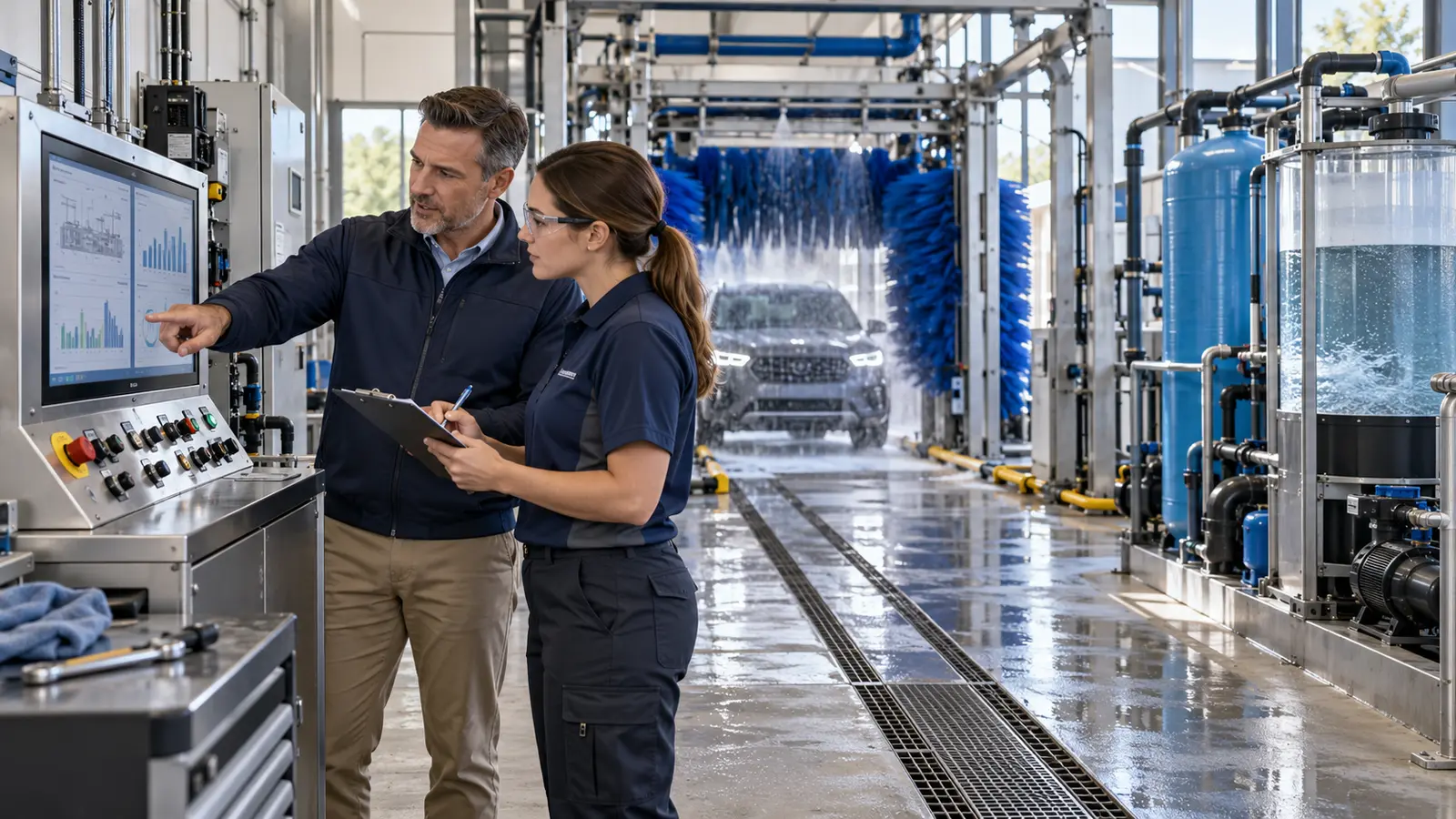
A car wash can be an operating business, a specialized equipment platform, a membership program and a real-estate project at the same time. A useful funding request separates those pieces and connects the proposed investment with collected wash volume, retention, equipment uptime, utilities and realistic site economics.
Define the wash model and funding request
Describe whether the business operates an express exterior tunnel, full-service tunnel, in-bay automatic, self-service bays, hand wash, detailing operation or a mixed model. Separate retail washes, memberships, fleet accounts, detailing and ancillary sales because capacity, labor and margins differ.
State whether the request is for equipment, repairs, water reclaim, payment technology, a site acquisition, ground-up construction, conversion, renovation, second location, business acquisition, marketing or operating working capital. Prepare a detailed sources-and-uses schedule.
The CashMigo car wash business funding page provides a focused starting point. Tie the amount to documented demand, equipment capacity, site control and a conservative repayment source rather than only projected traffic.
Measure wash counts, average ticket and collected revenue
Prepare monthly and daily reports showing paid cars by wash package, membership redemptions, fleet volume, detailing jobs, retail add-ons, discounts, refunds, taxes and collected revenue. Reconcile point-of-sale reporting with bank deposits and processor statements.
Use collected average ticket, not menu price alone. Promotions, prepaid programs, unlimited memberships, coupons, refunds and free rewashes can change the revenue produced by each vehicle.
Compare wash counts by day, hour, weather, season and sales channel. Explain opening-hour changes, construction, nearby competition, road access or unusual events that affected historical volume.
Tell CashMigo what the business needs, how much and how soon. We will review the request and help identify potential next steps.
Check My Funding Options →Analyze memberships, retention and redemption
Prepare a membership schedule showing active paying members, monthly dues, additions, cancellations, freezes, failed payments, discounts, refunds and plan mix. Separate current collected memberships from trials, complimentary accounts and inactive records.
Track retention by cohort and redemption frequency. Membership revenue can support stability, but heavy use, discounting, card failures, high acquisition cost or rapid cancellation can reduce the cash available for payments.
Model how marketing, pay-station or license-plate-recognition investments may change signups, throughput and churn. Do not assume every new member remains active or that every member washes at the same frequency.
Build service-level and site-level margins
For each material service line, track collected revenue, chemicals, water and sewer, electricity or gas, direct labor, payroll burden, towels or consumables, repairs, merchant fees, membership technology, rent or property cost and allocated overhead.
Compare actual cost per wash and contribution margin with pricing. Utility surcharges, chemical dilution, labor, rewash rates, conveyor speed and equipment interruptions can make two similarly priced packages produce different cash results.
Separate site-level operating cash flow from owner compensation, debt service, taxes, capital repairs and expansion spending. That distinction helps show what the existing location can support before the proposed obligation.
Evaluate equipment capacity, condition and downtime
List conveyors, arches, pumps, dryers, vacuums, compressors, boilers, point-of-sale systems, pay stations, water-treatment and reclaim equipment with ownership, liens, age, condition, service history, downtime and replacement priority.
Equipment financing may fit qualifying identified assets when the applicant, vendor and transaction meet provider requirements. Include freight, installation, electrical, plumbing, concrete, controls, software, training, commissioning and interruption to existing operations in the budget.
Estimate throughput and savings using realistic uptime and operating hours. Added equipment should solve a documented bottleneck, repair risk, labor need or customer experience problem rather than relying only on rated maximum capacity.
Review property, lease and site-control economics
State whether the business owns the land and building, leases the entire site or operates under a ground lease. Provide the remaining term, options, rent escalations, assignment rights, use restrictions, maintenance obligations and landlord approval requirements when applicable.
For an acquisition, separate the value and cost of the business, equipment, land, building and post-closing improvements. Confirm what is included, liens, deferred maintenance, environmental matters, permits, utility capacity and working capital.
Commercial real-estate or SBA-related paths may be considered for qualifying owner-occupied property, acquisition, refinance, construction or improvement needs. Eligibility depends on the applicant, property, use, project, leverage, cash flow, documentation and provider.
Plan water, sewer, energy and environmental controls
Prepare recent water, sewer, electricity and gas bills with usage, rates, demand charges, seasonal changes and any municipal limits or surcharges. Compare usage with wash counts to identify leaks, inefficiency or equipment changes.
Document existing water-reclaim, reverse-osmosis, oil-water separation, drainage, backflow, storage and discharge controls at an appropriate summary level. Include maintenance, filter or media replacement, testing and required improvement costs.
Water reuse, discharge, stormwater, plumbing and environmental requirements vary by location and facility. Funding does not establish compliance; use current official guidance and qualified engineering, environmental, legal and local permitting professionals.
Plan construction, conversion and opening ramp
For ground-up or major renovation work, prepare site control, zoning or land-use status, utility capacity, design, permits, contractor bids, equipment contracts, contingency, schedule and the permanent funding or exit plan. Distinguish committed costs from estimates.
Include pre-opening payroll, training, marketing, chemicals, spare parts, software, insurance, taxes and working capital. A completed tunnel does not guarantee immediate wash volume or membership adoption.
Create downside cases for permit delay, utility work, weather, equipment delivery, construction overruns and a slower customer ramp. Do not commit all available liquidity to construction while leaving no operating reserve.
Build a repair, maintenance and continuity plan
Prepare preventive-maintenance schedules, service contracts, critical spare-parts lists and recent repair history. Show which equipment failures stop the entire wash, reduce throughput or affect only an add-on service.
Estimate lost revenue, emergency labor and customer credits during downtime. Compare repair, rebuild and replacement alternatives using useful life, reliability, efficiency, warranty, service access and total installed cost.
Plan how customers, members and staff will be handled during extended downtime. A realistic forecast includes reduced collections while continuing rent, payroll, insurance, utilities and existing obligations.
Build a 13-week cash-flow forecast
Map expected retail, membership, fleet and detailing collections against payroll, chemicals, utilities, rent or property costs, repairs, insurance, taxes, merchant fees, current obligations and proposed payments by week.
Create downside cases for bad weather, equipment failure, utility-rate increases, slower membership growth, elevated cancellations, road disruption and delayed opening or renovation.
Place the proposed payment after essential operating expenses and capital maintenance. If the plan depends on maximum throughput, perfect weather or immediate membership growth, reduce the amount or reconsider the structure.
Prepare a clear, secure starting file
Useful starting records may include recent bank statements, year-to-date and prior-year financials, point-of-sale and wash-count reports, membership summaries, utility bills, equipment and maintenance records, property or lease information, permits, current obligations and a sources-and-uses schedule.
Add purchase agreements, leases, equipment contracts, contractor bids, appraisals, environmental reports and detailed customer or operating records only when requested through an approved secure channel. Explain material liens, deferred maintenance, permit issues, failed payments or disputes directly.
Begin through CashMigo's 60-second funding check using non-sensitive business information. Never submit license-plate records, vehicle images, customer identities, membership credentials, payment-card data, bank credentials or private access information through the general form.
Compare structure and payment pressure
Compare gross amount, deductions, net proceeds, total cost, payment amount and frequency, term or expected duration, collateral, liens, guarantees, covenants, default terms, renewal conditions, end-of-term obligations and early-payoff treatment.
Place the proposed payment into normal, equipment-downtime and slower-volume forecasts after utilities, chemicals, payroll, rent, repairs and essential maintenance. Do not rely on another immediate advance or unproven membership growth.
Review agreements, real estate and equipment decisions with qualified legal, accounting, tax, insurance, equipment, construction, engineering and environmental professionals. Speed should not replace a complete evaluation of total economics and operating risk.
Frequently asked questions
Can tunnel, bay, vacuum or water-reclaim equipment be financed?
Potentially. Providers may review the asset, vendor, price, age, condition, installation, useful life, service availability, applicant profile, credit, cash flow and down payment when applicable.
Can funding support buying or building a car wash?
Potentially. Providers may review the business, property, equipment, purchase or construction plan, valuation, permits, utilities, historical results or projections, buyer experience, equity and working capital.
Why do wash counts and membership retention matter?
They help show demand, revenue quality and use of capacity. Collected ticket, active paying members, redemption, churn, discounts, failed payments and seasonality provide more context than headline sales alone.
Can working capital cover chemicals, payroll or repairs?
Potentially. Providers may review collected revenue, operating history, documented expenses, credit, current obligations and the proposed use of funds.
Does funding confirm water or environmental compliance?
No. Funding is separate from water use, reuse, discharge, drainage, stormwater, plumbing, permitting and environmental requirements.